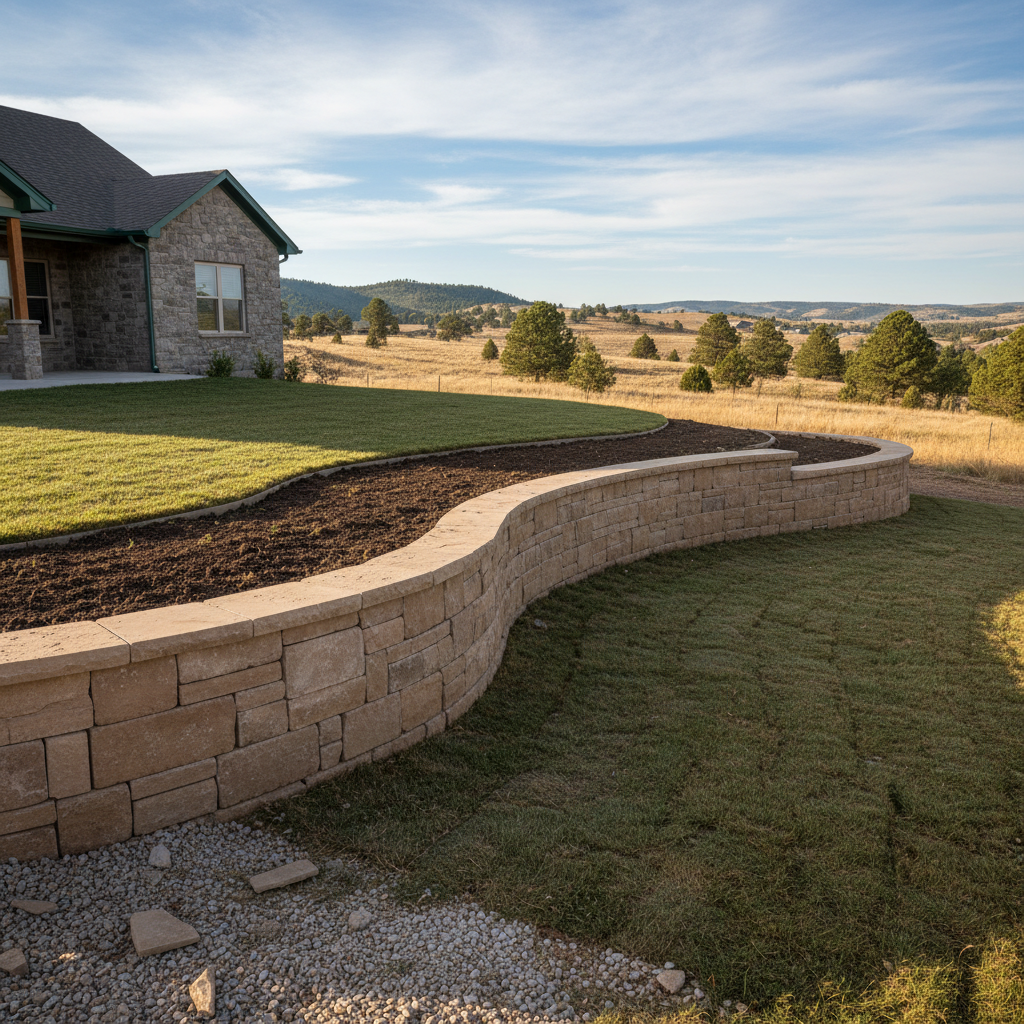
Extend Your Retaining Wall's Life: It's All About the Build (and Aftercare)
You've got a retaining wall, or you're thinking about putting one in. Either way, you want it to last. And let me tell you, here in Rapid City, with our freeze-thaw cycles and sometimes heavy spring rains, a wall takes a beating. The biggest factor in how long your wall lasts starts with how it was built. A good wall has proper drainage behind it – think gravel backfill and a perforated pipe – to handle all that water. Without it, water builds up, freezes, expands, and pushes on the wall. That's a recipe for disaster.
Beyond the initial build, extending its life means keeping up with the basics. Don't let water pool around the base of the wall. Make sure your gutters aren't dumping directly onto it or nearby. And if you've got a sprinkler system, check those heads. You don't want them constantly saturating the soil right next to your wall.
Regular Maintenance: Simple Checks That Save Big Headaches
You don't need to be a structural engineer to keep an eye on your retaining wall. A few times a year, especially after heavy rains or snowmelt, just walk along it and give it a good look. What are you looking for?
- Drainage Outlets: If your wall has 'weep holes' or drainage pipes sticking out, make sure they're clear. Leaves, dirt, even small critters can block them up. A blocked drain means water is building up behind the wall, and that's exactly what you want to avoid.
- Surface Grading: Is the ground in front of your wall sloping away from it? It should be. If it's flat or, worse, sloping towards the wall, water will sit there and eventually undermine the base.
- Vegetation: Small plants growing in cracks aren't usually a big deal, but if you've got shrubs or trees growing too close, their roots can put pressure on the wall over time. Keep them trimmed back or consider moving them if they're getting too big.
- Cleanliness: Just like anything else, a clean wall looks better and makes it easier to spot issues. A quick wash with a hose can remove dirt and grime.
It's not rocket science, but these simple checks can prevent small issues from turning into major repairs.
Warning Signs: When Your Wall is Trying to Tell You Something
Your retaining wall won't just collapse without warning (usually). It'll give you clues. You just need to know what to look for. These are the red flags:
- Bulging or Leaning: This is probably the most obvious sign. If a section of your wall looks like it's pushing out or tilting forward, that's a serious problem. It means there's too much pressure behind it, likely from water or soil movement.
- Cracks: Small hairline cracks are common, especially in concrete or mortared walls, due to expansion and contraction. But if you see cracks that are widening, getting longer, or running horizontally along the wall, that's a concern. Vertical cracks that are wide at the top and narrow at the bottom (or vice versa) can also indicate movement.
- Separation: If the blocks or stones are starting to pull apart, or if the capstones are shifting, that's a sign of instability.
- Washing Out: Are you seeing soil or gravel washing out from under or through the wall? That means the backfill is eroding, and the wall is losing its support. This is particularly common in areas with sandy or silty soil, like what you find near Box Elder.
- Water Seepage: While weep holes are good, if you're seeing water constantly seeping through the face of the wall in multiple spots, it suggests the drainage system behind it isn't working effectively.
Don't ignore these signs. They're not going to fix themselves.
When to Call a Professional: Don't DIY a Disaster
Look, I'm all for homeowners tackling projects, but some things are best left to the pros. When you see any of those serious warning signs – bulging, significant cracking, leaning – it's time to call someone who knows what they're doing. A failing retaining wall isn't just an eyesore; it can be a safety hazard, especially if it's holding back a significant amount of soil or is near a structure.
Here at Guardian Landscaping, we've seen walls in every state of disrepair. We can assess the situation, figure out why it's failing, and give you an honest opinion on whether it can be repaired or if it needs to be rebuilt. Sometimes a small repair now can save you from a complete rebuild later. Don't wait until it's too late and you've got a whole hillside in your backyard.
```